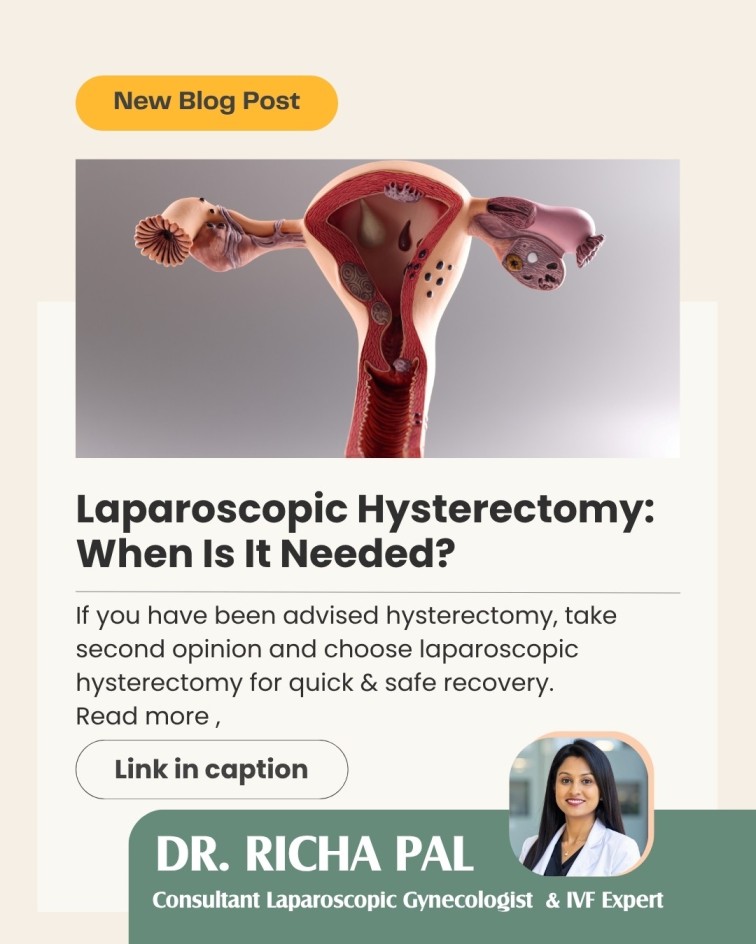
A laparoscopic hysterectomy is a minimally invasive surgical procedure used to remove the uterus through small keyhole incisions in the abdomen. A thin camera called a laparoscope is inserted through one of the incisions, allowing the surgeon to perform the surgery with precision.
Unlike traditional open surgery, laparoscopic hysterectomy causes less tissue damage, resulting in:
- Smaller scars
- Less postoperative pain
- Reduced blood loss
- Lower risk of infection
- Shorter hospital stay
- Faster return to daily activities
Depending on the condition, the procedure may involve removal of:
- Uterus only
- Uterus and cervix
- Uterus along with fallopian tubes
- Uterus, tubes, and ovaries when medically necessary
A hysterectomy is usually considered when conservative treatments such as medications, hormonal therapy, or minor procedures fail to provide adequate relief.
- Large Uterine Fibroids
Fibroids are non-cancerous growths within the uterus that can cause:
- Heavy menstrual bleeding
- Pelvic pressure
- Frequent urination
- Abdominal enlargement
- Anemia
When fibroids are large, multiple, recurrent, or severely symptomatic, hysterectomy may provide a permanent solution.
- Adenomyosis
Adenomyosis occurs when the uterine lining grows into the muscular wall of the uterus.
Symptoms include:
- Severe menstrual pain
- Heavy bleeding
- Enlarged uterus
- Chronic pelvic discomfort
Women who have completed their family and continue to experience symptoms despite treatment may benefit from hysterectomy.
- Chronic Heavy Menstrual Bleeding
Excessive menstrual bleeding can significantly affect daily life and may lead to anemia and fatigue.
When medications and hormonal treatments fail, laparoscopic hysterectomy may offer long-term relief.
- Endometriosis
Endometriosis occurs when tissue similar to the uterine lining grows outside the uterus.
Common symptoms include:
- Severe pelvic pain
- Painful periods
- Pain during intercourse
- Infertility
In advanced or recurrent cases where fertility preservation is no longer desired, hysterectomy may be recommended.
- Uterine Prolapse
Uterine prolapse occurs when the uterus descends from its normal position due to weakening of pelvic support structures.
Symptoms may include:
- Sensation of a bulge in the vagina
- Pelvic pressure
- Difficulty urinating
- Discomfort while walking
Hysterectomy may be performed along with pelvic floor repair procedures.
- Persistent Pelvic Pain
Some women suffer from chronic pelvic pain caused by underlying gynecological conditions that do not respond to conservative treatment.
After thorough evaluation, hysterectomy may be considered as part of a comprehensive treatment plan.
- Precancerous and Cancerous Conditions
In certain cases involving:
- Endometrial hyperplasia
- Cervical precancerous lesions
- Uterine cancer
- Early-stage gynecological cancers
A hysterectomy may be medically necessary to prevent disease progression.
Compared with traditional open surgery, laparoscopic hysterectomy offers several advantages:
Less Pain
Smaller incisions result in reduced postoperative discomfort.
Faster Recovery
Most women can resume normal activities much earlier than after open surgery.
Minimal Scarring
Tiny incisions leave barely visible scars.
Lower Risk of Infection
Smaller wounds generally mean fewer postoperative complications.
Reduced Blood Loss
Advanced laparoscopic techniques help minimize bleeding during surgery.
Shorter Hospital Stay
Many patients are discharged within 24–48 hours.
You may be a suitable candidate if you have:
- Symptomatic fibroids
- Adenomyosis
- Endometriosis
- Heavy menstrual bleeding
- Uterine prolapse
- Chronic pelvic pain
- Certain gynecological cancers
A detailed consultation and evaluation with an experienced laparoscopic gynecologist are essential to determine the best treatment approach.
Recovery is generally smoother compared to open surgery.
Most patients can expect:
- Walking within a few hours after surgery
- Hospital discharge within 1–2 days
- Return to desk work within 2–3 weeks
- Full recovery within 4–6 weeks
Patients are advised to avoid heavy lifting and strenuous activities during the recovery period.
A laparoscopic hysterectomy can be a life-changing procedure for women suffering from severe fibroids, adenomyosis, endometriosis, heavy bleeding, or other gynecological conditions. The minimally invasive approach offers significant benefits, including less pain, faster recovery, and improved quality of life.
If you are experiencing persistent gynecological symptoms and would like to explore your treatment options, consult Dr. Richa Pal, an experienced laparoscopic gynecologist in Bengaluru, for a comprehensive evaluation and expert guidance.